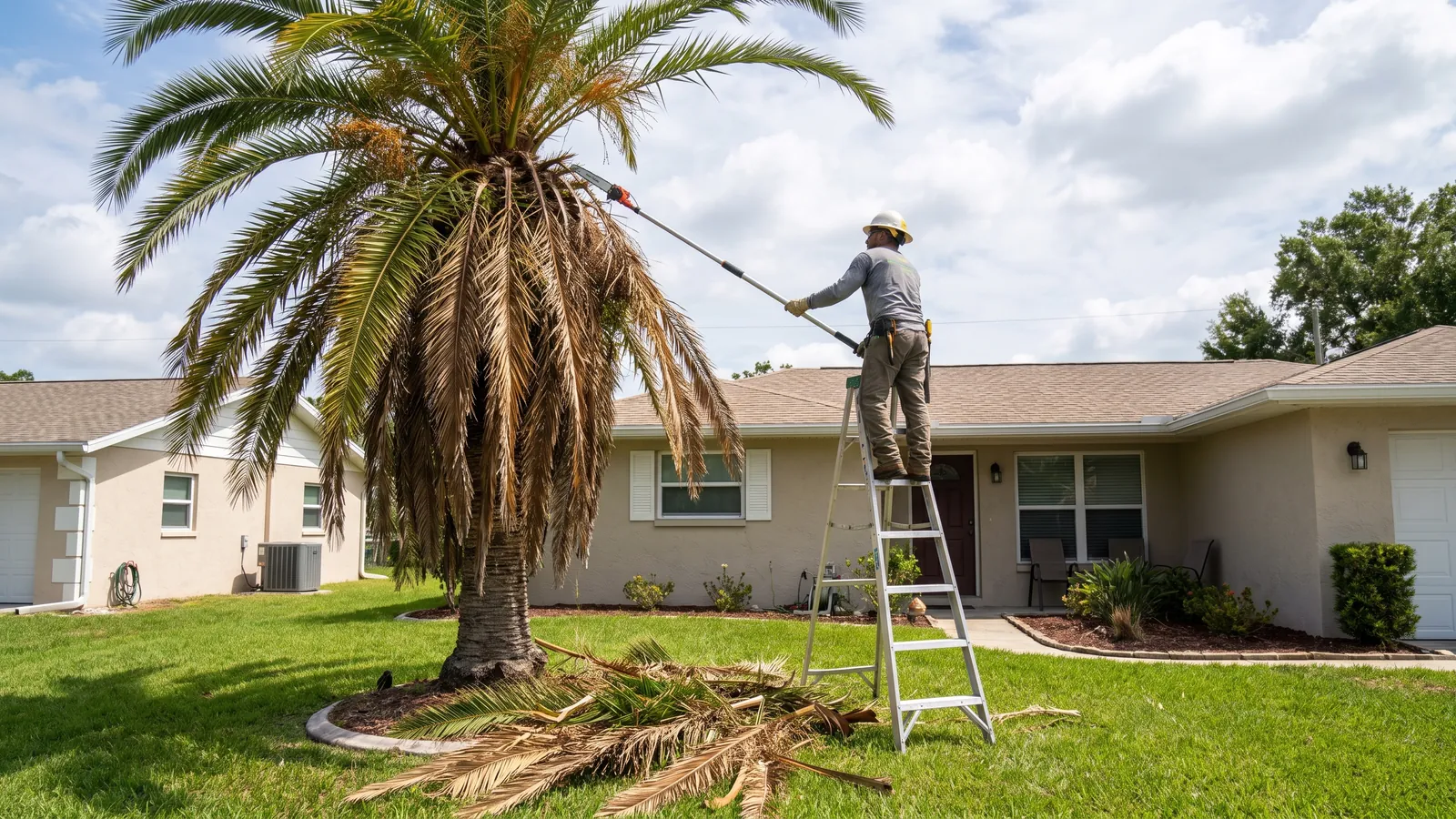
Florida's state tree is the sabal — the cabbage palm — and Lakeland is full of them, along with queen palms in the 1980s–2000s subdivisions, Washingtonias along the lakes and the commercial strips, date palms in front of the nicer houses, and foxtails and pygmy dates in the newer landscaping. They all need the same thing and it's less than most people think: dead and dying fronds removed, seed pods and flower stalks cut before they drop, and on sabals, the old boots cleaned if you want the smooth look. A healthy palm needs its green fronds — that's where it makes its food and stores its reserves — and a palm pruned above the horizontal ('hurricane cut,' 'pineapple cut') is a weaker palm with a narrower trunk, more susceptible to disease, and more likely to snap in a storm, not less.
We prune to the 9-and-3 rule — nothing above an imaginary line from nine o'clock to three o'clock through the crown — and we do it with clean tools, because the planthopper-borne lethal bronzing disease that's killing queens and sabals across Polk County can also be spread on dirty saws. Timing matters: the best time to trim palms in Polk is late spring, before hurricane season, when the seed pods are forming and the old fronds are ready; a second light pass in the fall is plenty. Sabals in the wild never get trimmed at all and do fine, so if a crew tells you your cabbage palm needs cutting twice a year, they need the work more than the palm does.
What's included
Dead fronds & seed pods
Brown and dying fronds, flower stalks and seed pods removed before they drop on the car or the cage.
9-and-3 standard
Nothing cut above the horizontal; the green crown stays full.
Boot cleaning on sabals
Old leaf bases removed for the smooth-trunk look, or left natural — your call.
Clean tools
Saws sanitized between palms to avoid spreading lethal bronzing and fusarium.
Tall palms
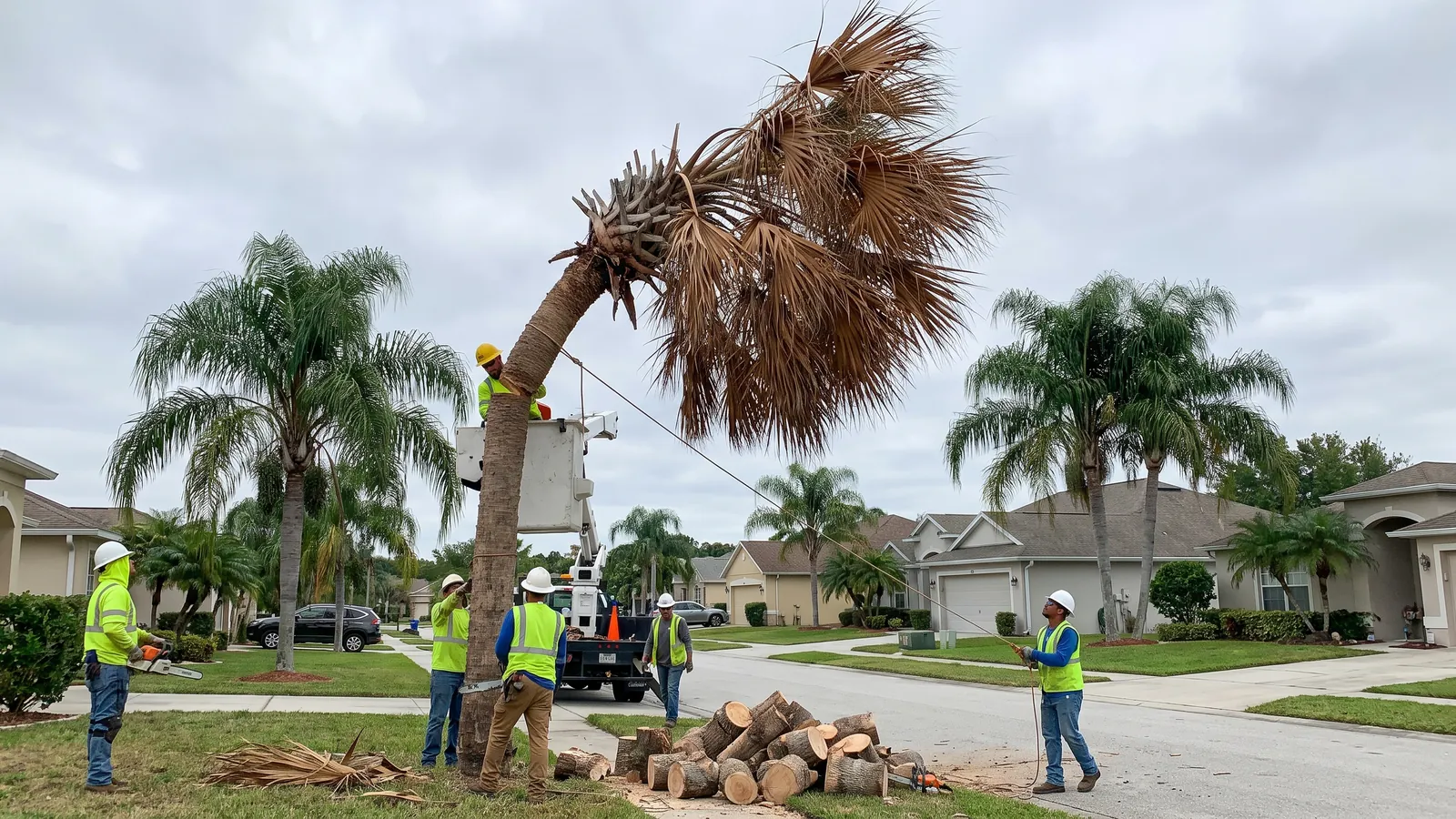
Washingtonias and sabals to 60 feet pruned from a bucket or climbed with spikes only on palms slated for removal.
Before the season
Scheduled in late spring so the crown is clean when the first storm comes.
Palm trimming cost in Lakeland, FL
| Job | Typical price | Notes |
|---|---|---|
| Small palm, under 15 ft | $100 – $200 | Pygmy date, foxtail, young queen |
| Medium palm, 15–30 ft | $200 – $350 | Most queens and sabals |
| Tall palm, 30–60 ft | $350 – $500 | Washingtonias, mature sabals |
| Date palm, full clean | $300 – $600 | Thorns, boots, pods |
| Multiple palms, same visit | Discounted | Five or more on one property |
These are 2026 Polk County ranges so you can budget. Your written price is itemized — the climb or bucket work, rigging, chipping and haul-off, stump grinding, crane time, permit check — and good for 30 days.
Recent work
Questions we get about palm trimming
How often do palms need trimming?
Once a year for most, twice for fast-shedding queens and date palms. Sabals can go longer. If a company wants to come quarterly, they're trimming green fronds, which hurts the palm.
Is the hurricane cut safer?
No — the opposite. The University of Florida's research is clear that over-pruned palms are weaker, narrower at the trunk and more likely to fail in wind. A full, healthy crown sheds wind the way it's designed to.
Why are my queen palm's fronds yellowing from the bottom?
Usually a nutrient deficiency — potassium or magnesium — common in Polk's sandy soils, and fixable with the right palm fertilizer. Yellowing or bronzing that starts at the oldest fronds and moves fast, with the spear leaf dying, is lethal bronzing, which is not fixable. We'll tell you which.
Can you remove the seed pods before they drop?
Yes, and it's the main reason to trim in late spring: queen palm seed drop is a mess and attracts rats, and sabal flower stalks drop constantly.
Do you climb with spikes?
Only on palms that are coming down. Spike wounds on a palm never heal and invite disease.