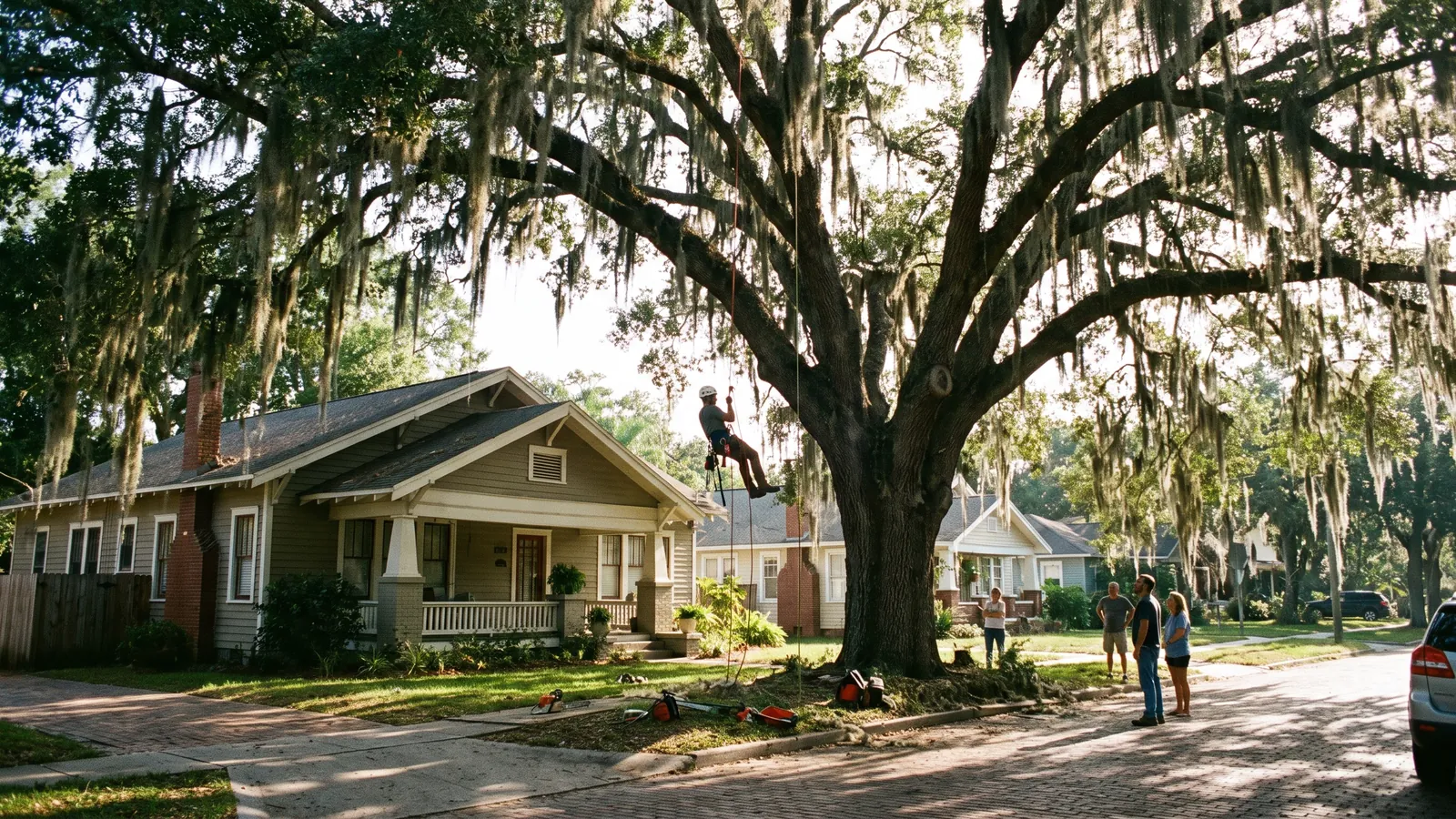
Lakeland's oaks are a hundred years old. Some of them shouldn't be.
Tree removal, crane work, oak and palm trimming, dead-pine and lethal-bronzing removal, stump grinding, hurricane prep and 24/7 storm response across Lakeland and Polk County — by insured local crews with an ISA Certified Arborist on staff, an honest opinion on whether the tree really has to go, and a written price before a saw starts.
ISA Certified Arborist on staff · General liability and workers' comp · Free estimates · Written price before a limb comes down
A tree company built for laurel oaks, slash pines and sabal palms
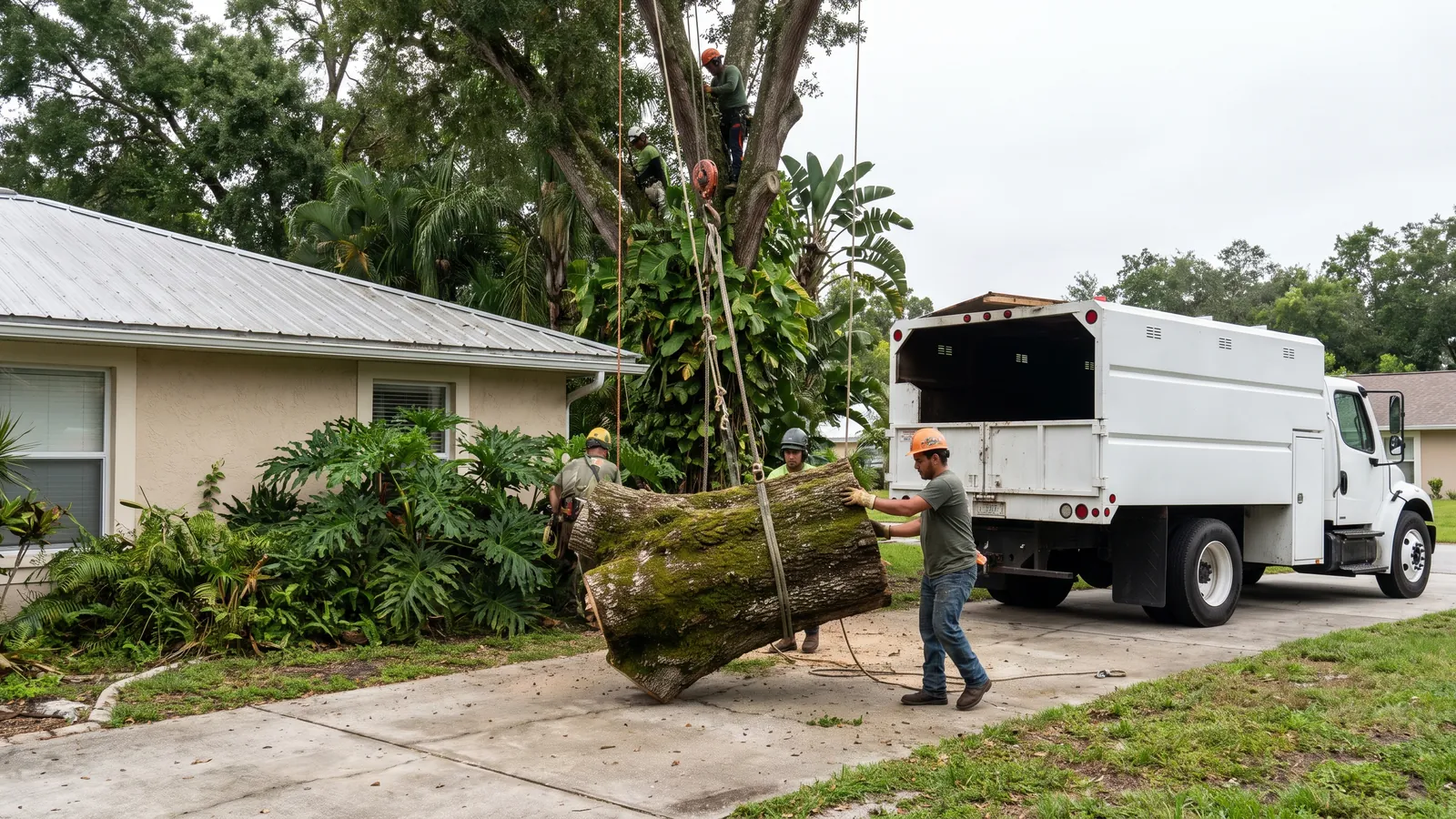
Tree removal
Hollow laurel oaks, dead pines, leaning water oaks, trees over the house — rigged down in pieces, chipped, hauled, raked.
Removal & pricing →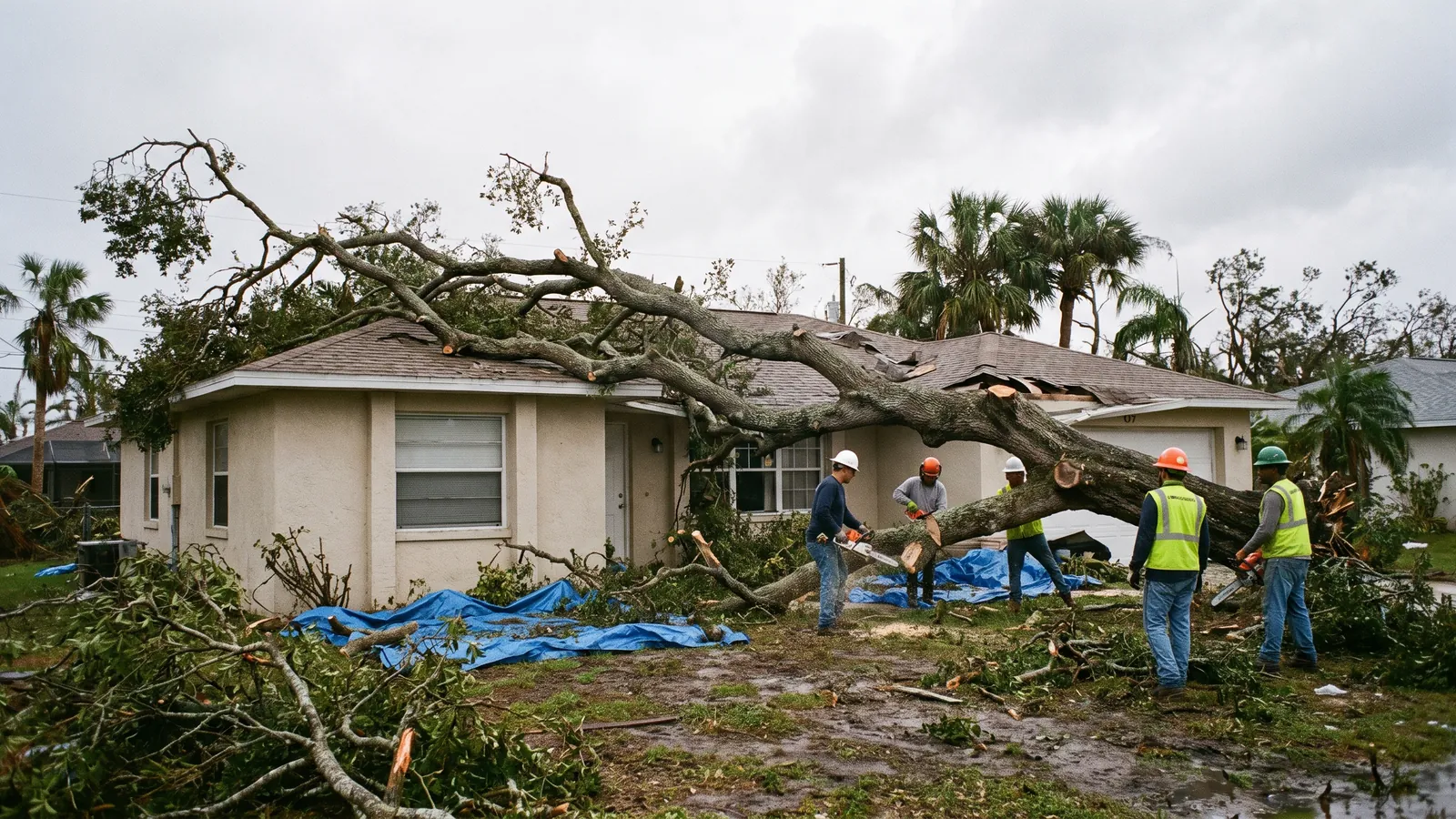
24/7 emergency tree service
A limb through the roof, a tree across the driveway, a pine on the power drop — dispatched by priority any hour, paperwork afterward.
Emergency service →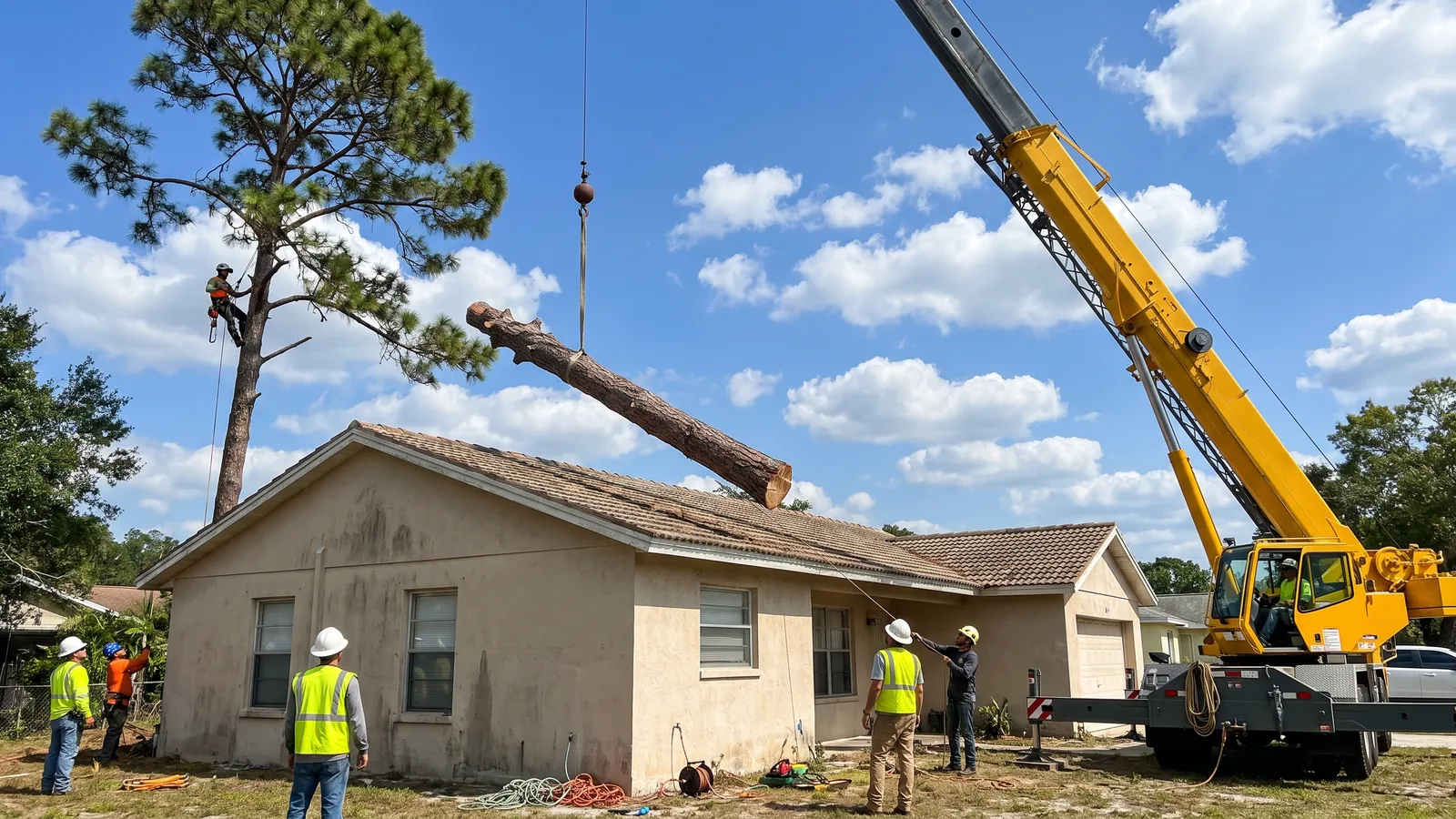
Crane tree removal
For the 80-foot pine over the pool cage or the oak with no drop zone: lifted out in sections, nothing dragged across the lawn.
Crane work →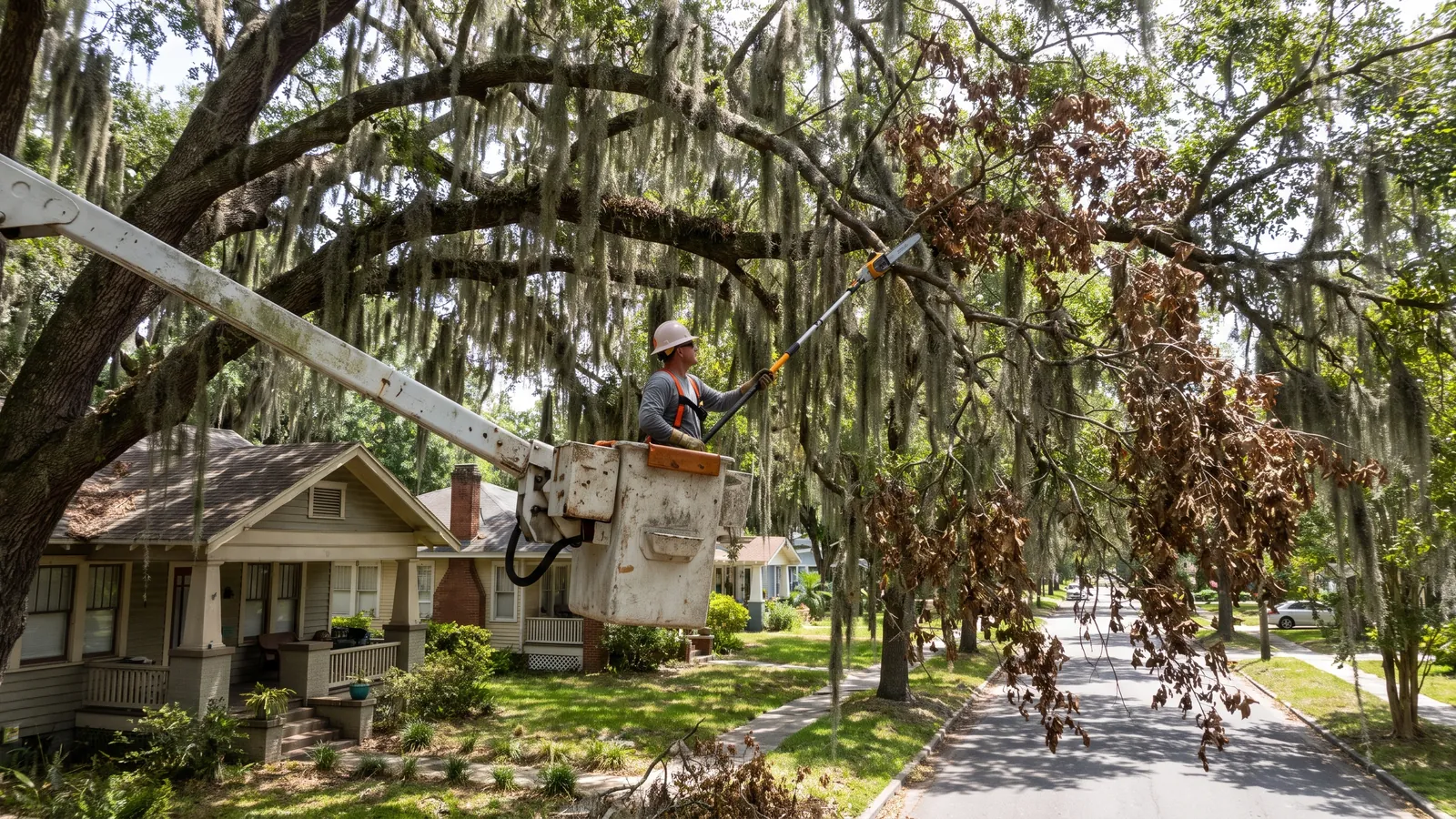
Tree trimming & pruning
Deadwooding, crown cleaning, clearance from the roof and the service drop — ISA pruning standards, never topping.
Trimming →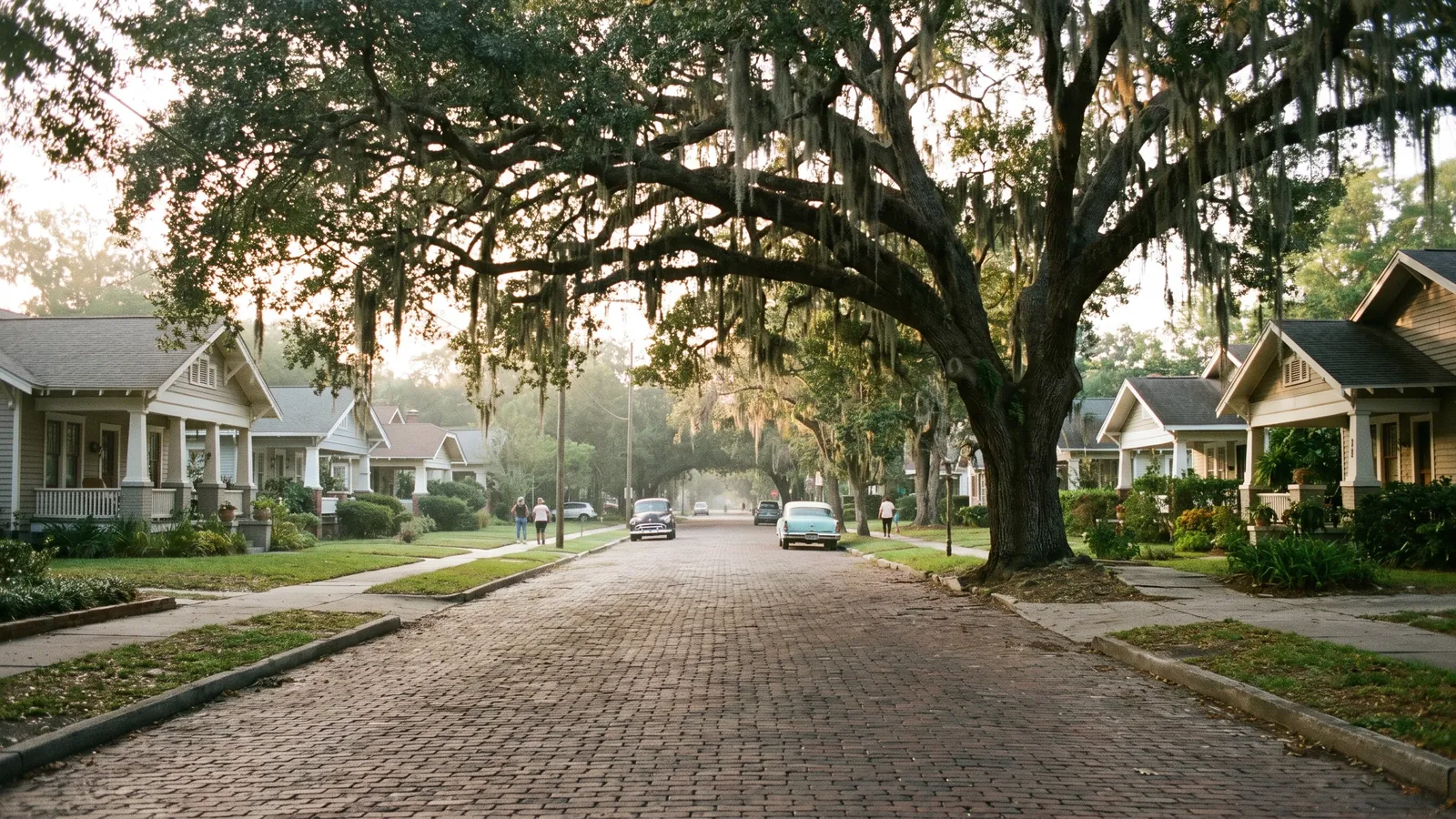
Live oak & laurel oak care
Structural pruning for the century oaks in Dixieland and Beacon Hill, and the honest conversation about the laurel oaks.
Oak care →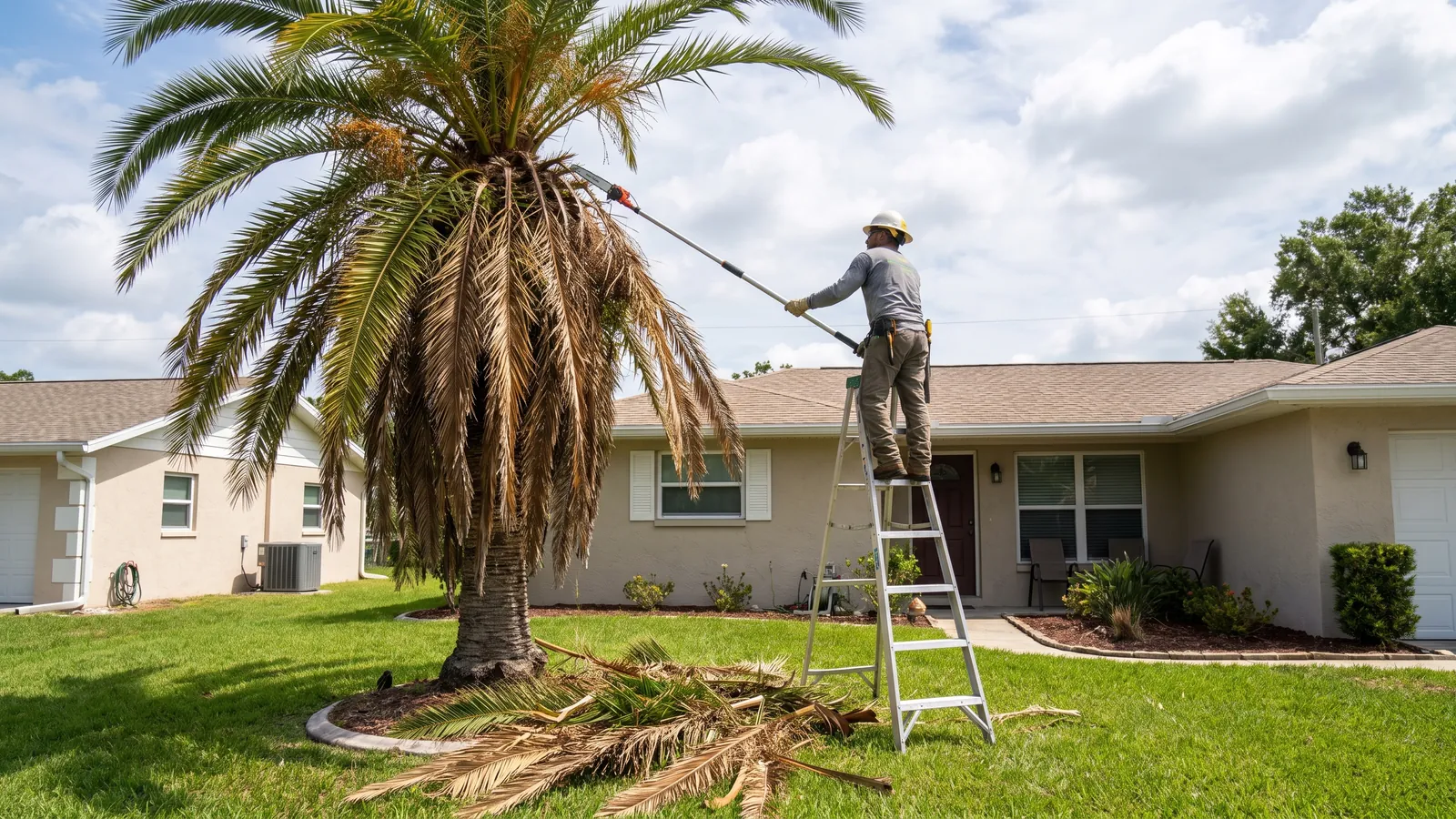
Palm trimming
Sabals, queens, Washingtonias and date palms — dead fronds and seed pods only, no hurricane cuts, before the season.
Palm trimming →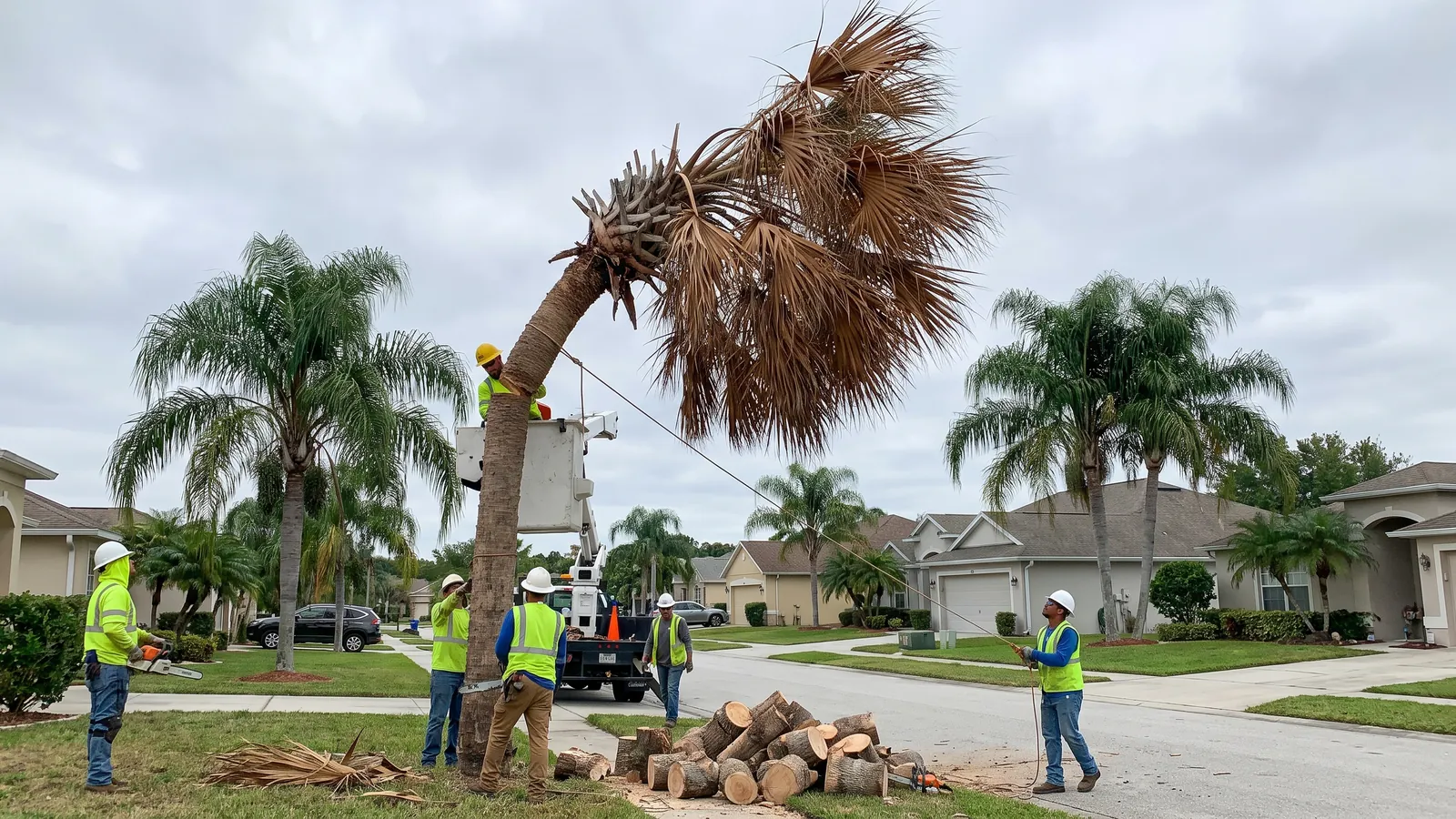
Palm removal & lethal bronzing
Bronzed, collapsed queens and sabals taken down and hauled before the planthopper moves to the next palm.
Palm removal →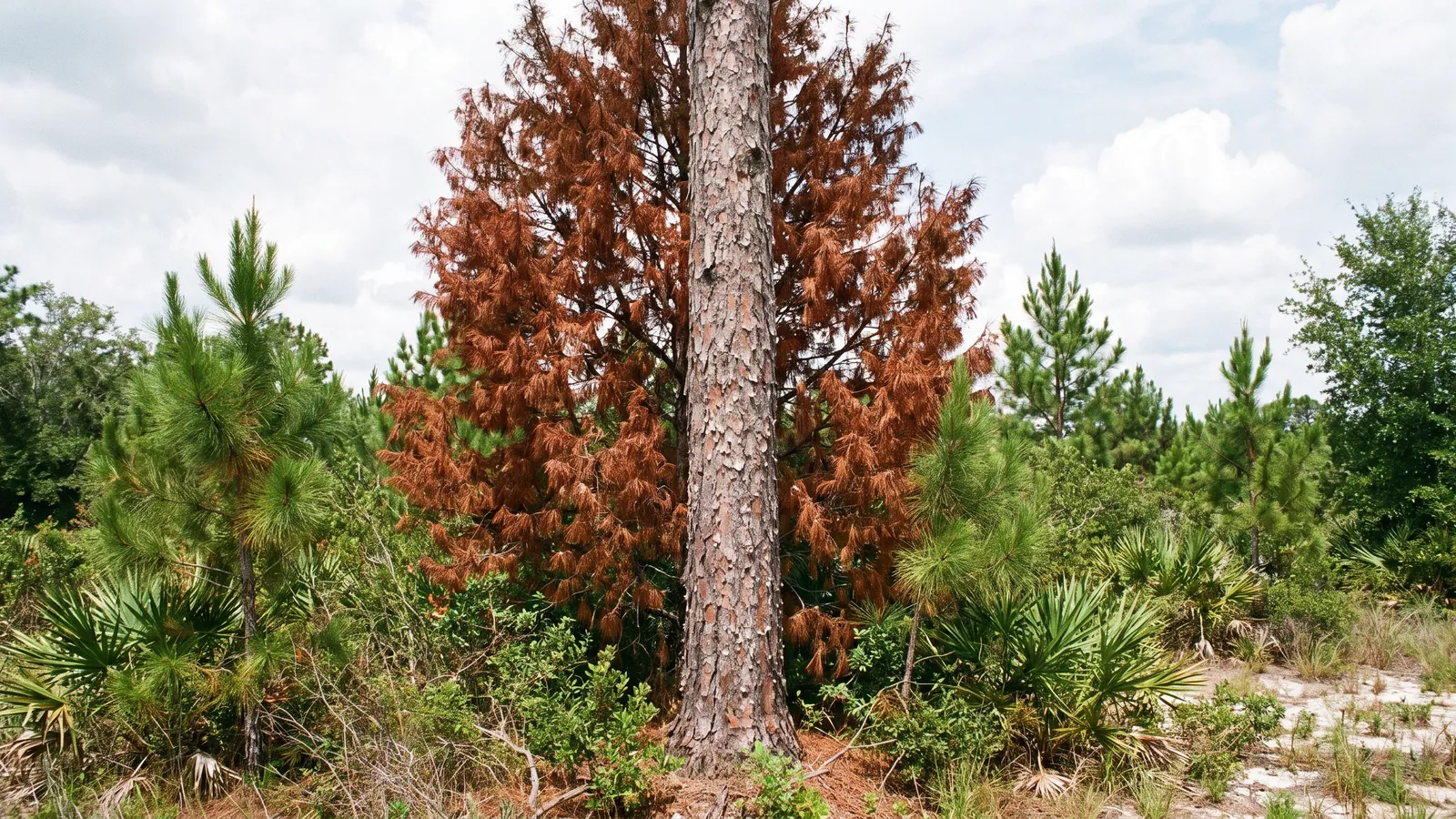
Dead pine & pine beetle removal
Red-needled slash pines with Ips beetles come down now; gray ones before the next storm. Lightning strikes assessed.
Pine removal →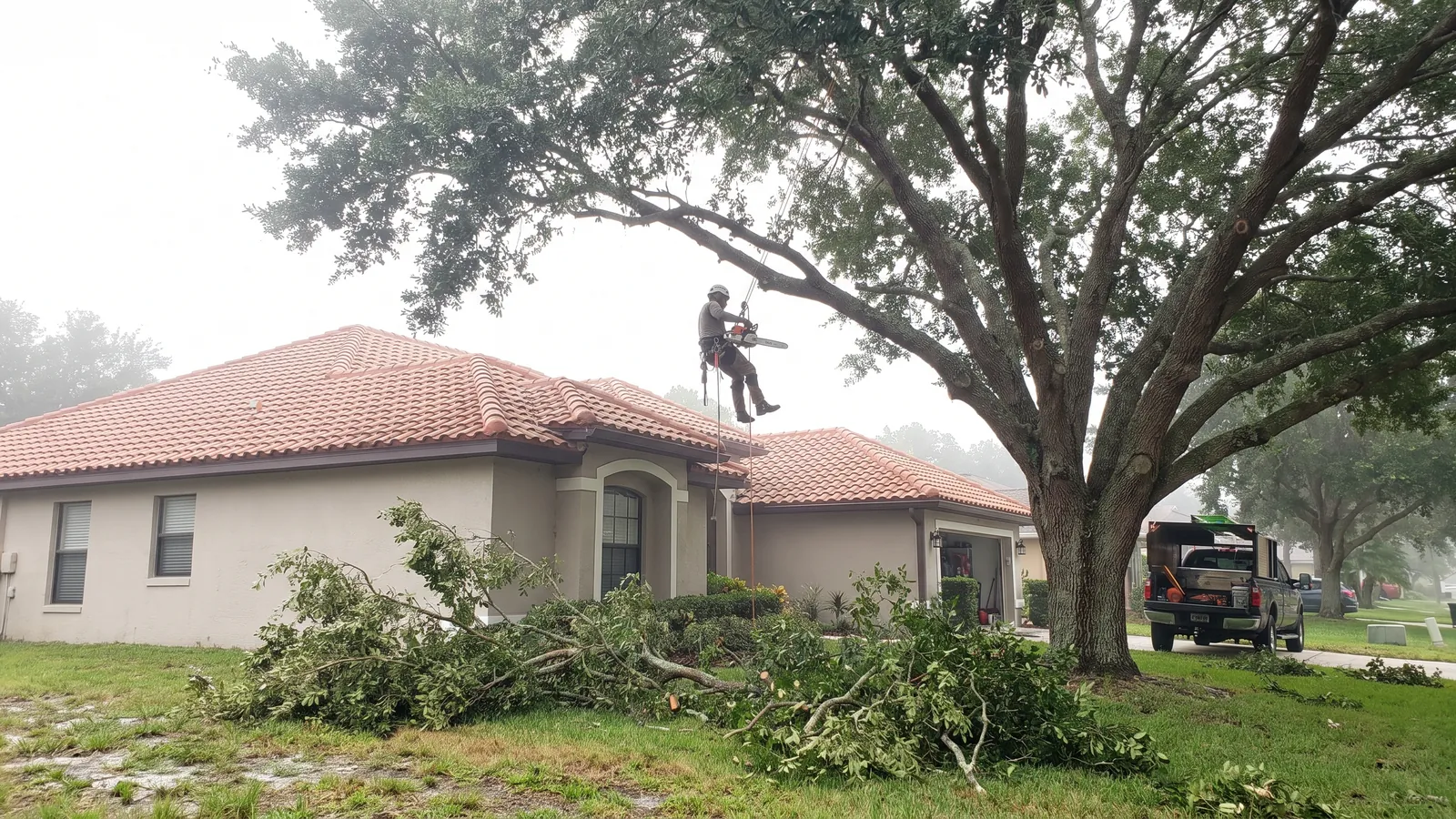
Hurricane tree prep
Canopy thinning, weight reduction over the roof, and the removals that should happen in May, not in the dark after a storm.
Hurricane prep →Three numbers that decide most Lakeland tree calls
Lakeland has 38 named lakes, 56,000 public trees, a 26 percent canopy and a hundred-year-old planting pattern. These are the numbers that matter when you're deciding whether a tree stays, gets pruned or comes down.
Years a laurel oak lives
The historic districts were planted in the 1920s and 30s with laurel oaks and water oaks because they grow fast. Laurel oaks hollow at about fifty years and carry ten-to-twenty-foot decay columns inside a trunk that looks sound; water oaks break apart at maturity. Live oaks live for centuries. Which one you have decides everything.
The line for a Lakeland permit
On a single- or two-family lot under an acre that isn't part of a development plan, Lakeland's tree-preservation code doesn't require a permit to remove a tree. Over an acre, on commercial land, in the right-of-way, or inside a subdivision plan, it can. And under F.S. 163.045, an arborist-documented danger tree needs no local permit at all.
Lightning events in Polk County, 2025
The highest total of any county in the country. A strike runs down the trunk and either kills the tree outright, leaves a spiral scar that invites beetles and rot, or does nothing visible and the tree dies a year later. We assess struck trees before you decide.
Four trees that keep our phone ringing
Laurel & water oaks
Planted fast in the 1920s, failing now. Ivan took 23 percent of the laurel oaks it hit and 28 percent of the water oaks; live oaks lost 9. A hollow laurel oak over a Dixieland bungalow is the most common removal we do.
Oak care →Beetle-killed slash pines
Ips engraver beetles hit stressed pines after drought, lightning and construction. Needles go red, then gray; the tree is dead either way and drops limbs for a year before it falls.
Pine removal →Lethal bronzing
A planthopper-borne disease, in Florida since 2006 and now across 30-plus counties. The crown bronzes, the spear leaf dies, and the palm is gone in months. No cure; preventive injections for the neighbors.
Palm removal →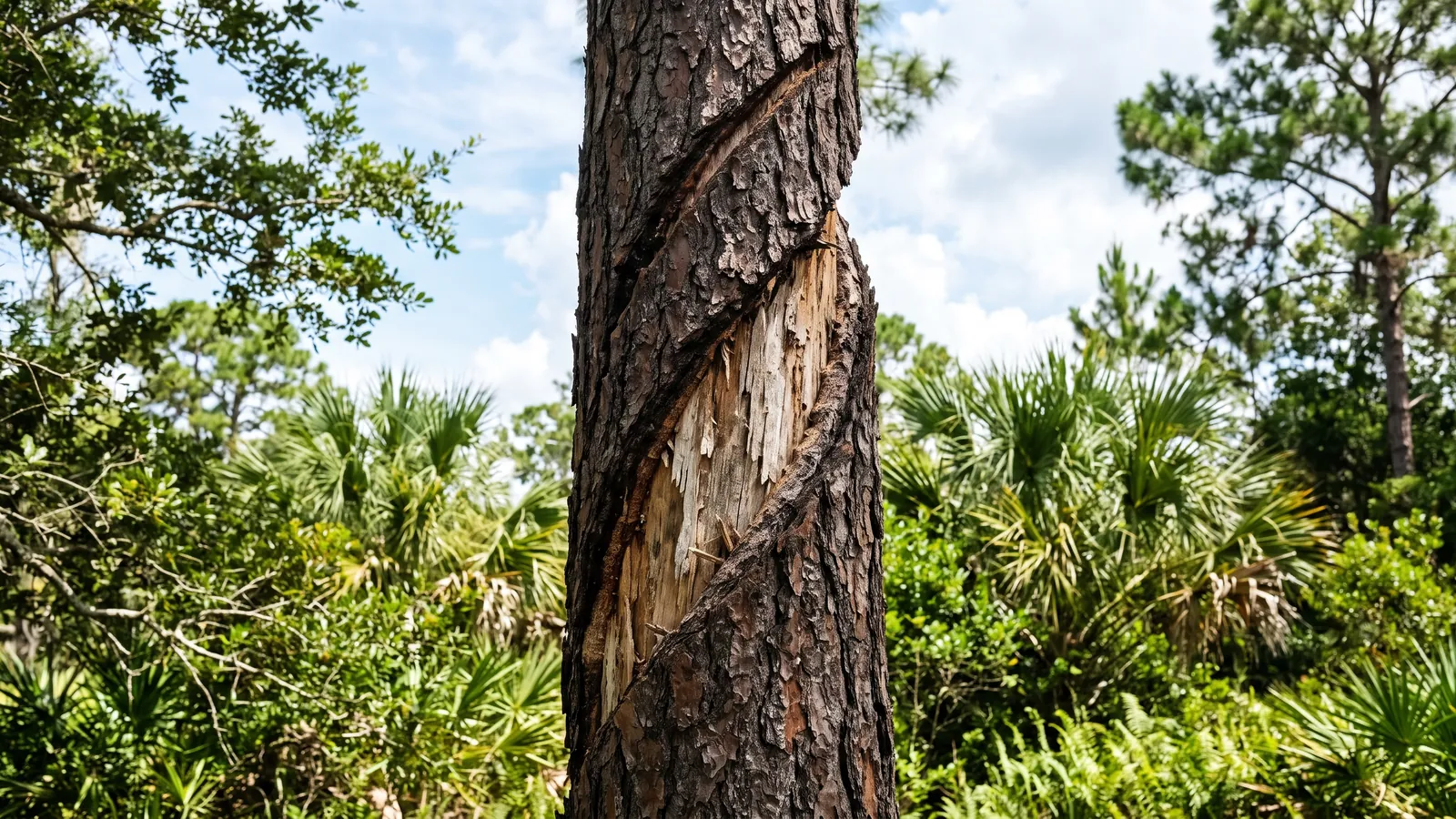
Lightning-struck trees
Polk County led the nation in lightning in 2025. A strike that spirals down a pine or an oak can kill it outright or slowly; the ones that look fine are the ones that fall in the next storm.
Lightning guide →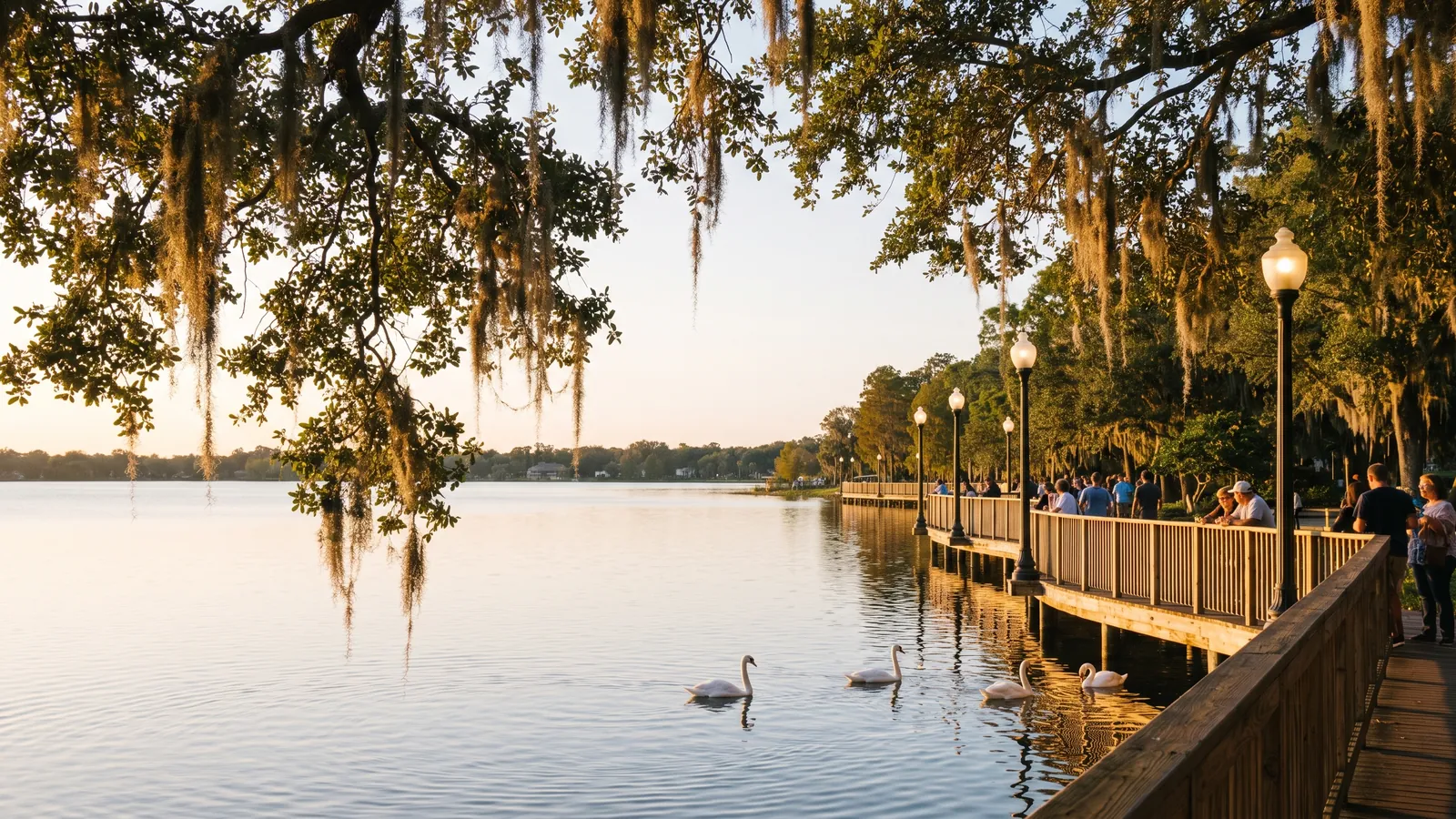
Lakeland is a city of lakes, swans and hundred-year-old oaks in the fastest-growing county in the country
Lakeland was platted in 1884 and incorporated in 1885 on the Lakeland Ridge between Tampa and Orlando, with 38 named lakes inside the city — Lake Parker the biggest at 2,200 acres, Lake Hollingsworth with Florida Southern's Frank Lloyd Wright campus on its north shore, Lake Morton with the swans descended from the pair Queen Elizabeth II sent in 1957. The historic neighborhoods around them — Dixieland, Beacon Hill, Lake Hunter Terrace, the South and East Lake Morton districts, Biltmore-Cumberland — were planted in the 1910s–30s, and the oaks that shade their brick streets are the reason people move here and the reason we stay busy. The city has 56,000 public trees in 300 species, a canopy that's slipped to 26 percent, and a City Tree Crew for the public ones; the private ones are ours.
Polk County is the other half of the story. It grew more than 20 percent between 2020 and 2025 to 875,000 people, Axios called Lakeland–Winter Haven 'America's fastest-growing metro' in 2024, and that growth means lot clearing in the north and south, trees stressed by construction next door, and new residents who've never been through a hurricane season with a 70-foot slash pine over the lanai. Then the storms: Charley, Frances and Jeanne put three eyes within two miles of southern Polk in six weeks in 2004; Irma crossed the county as a Category 2 in 2017 with 115 mph gusts near Mulberry and took 15 days to restore; Ian put 63,000 Lakeland Electric customers in the dark in 2022; and Milton in October 2024 dropped 12 inches of rain on the city in a day, gusted to 87 mph at Winter Haven, and left 200,000 to 250,000 cubic yards of tree debris for the city to pick up.
So we do the boring things right: an ISA Certified Arborist looks at the tree before anyone sells you a removal, every crew carries general liability and workers' comp and you can see the certificate before they climb, we rig over roofs instead of dropping, we call Sunshine 811 before we grind a stump, and we answer the phone the morning after the storm. And because we're here year-round, we're the crew that knows which oak on your street is hollow and which one will outlive us all.
Four steps, no surprises
Call or send the form
A leaning oak, a dead pine, a palm that's gone bronze, a limb on the roof — tell us what you're seeing. We answer around the clock.
An estimator walks the property
Usually within a day or two. They look at the lean, the root flare, decay, the drop zone and how the equipment gets in — and tell you whether the tree really needs to come down.
Written, itemized price
Removal, trimming, crane, stump grinding, haul-off — every line, plus whether a permit applies. No deposit until you approve and we schedule.
Done in a day, raked like we weren't there
Most residential jobs are a day. Everything chipped and hauled, the lawn raked, the stump ground if you asked, photos sent the same evening.
From Dixieland and Lake Morton to Lake Gibson, Highland City and the whole county
We're across Lakeland every week: the historic districts around Lake Morton, Lake Hollingsworth and Lake Hunter — Dixieland, Beacon Hill, Lake Hunter Terrace, Biltmore-Cumberland; north Lakeland around Lake Gibson, Gibsonia and Kathleen; the south side through Lakeland Highlands, Medulla and Highland City toward Mulberry; and the east side around Lake Parker and Combee Settlement.
Beyond the city we cover Winter Haven, Bartow, Auburndale, Lake Alfred, Plant City, Mulberry, Fort Meade, Polk City, Haines City, Davenport and Lake Wales — the whole of Polk County and the Plant City side of the Hillsborough line.
See the full service area →
Questions Lakeland homeowners ask us
How much does tree removal cost in Lakeland?
In 2026 the average Lakeland removal runs about $1,100, with most jobs between $400 and $1,800. By height: a 20-foot tree is $230–$430, a 40-footer $450–$870, a 60-footer $680–$1,300, and an 80-foot slash pine or laurel oak $900–$1,730. Big live oaks over a house run $1,000–$5,000, palms $250–$1,500, and anything that needs a crane $2,500–$7,500. Stump grinding is $2–$5 per inch of diameter with a $100–$175 minimum. Every price we give is in writing after an estimator has walked the property.
Do I need a permit to remove a tree in Lakeland?
On a typical single-family lot under an acre, no. Lakeland's Land Development Code tree-preservation rules (Section 4.5.10) apply to trees removed as part of development activity, and lots zoned single- or two-family under an acre that aren't part of a subdivision plan are exempt. Separately, Florida Statute 163.045 says no local permit, fee or replanting can be required on residential property when an ISA Certified Arborist documents that the tree poses an unacceptable risk. Lots over an acre, commercial parcels and trees in the right-of-way are different, and we check before we cut.
Why are so many oaks in the historic districts failing?
Because they're laurel oaks and water oaks, not live oaks. Dixieland, Beacon Hill and Lake Hunter Terrace were planted in the 1920s and 30s, and laurel oaks live 50 to 70 years — they hollow out around 50 and carry decay columns ten to twenty feet long inside a trunk that looks fine. Water oaks are worse, breaking apart at maturity. Live oaks live for centuries. We can tell you which you have from the leaf and the bark, and whether yours is one to keep or one to take before the next storm does.
Is it true Polk County gets more lightning than anywhere?
In 2025, yes — Polk County recorded the highest total lightning count of any county in the United States, over a million events. Lakeland sits in the middle of Florida's lightning belt, and a strike that runs down a pine or an oak can kill it outright or leave it standing dead for a year before it fails. We assess struck trees, and we tell you honestly whether it's a wait-and-see or a take-it-down.
What happens to my dead pine if I leave it?
Pine bark beetles — Ips engravers and black turpentine beetles — go after stressed slash and longleaf pines across Polk County, and a pine whose needles have turned red or brown is already dead. A dead pine dries, the roots rot, and it falls, usually in the next storm and usually toward whatever is heaviest below it. The rule of thumb: green or red needles with beetle pitch tubes on the bark means remove now before the beetles spread to the next pine; gray needles means the beetles are gone and the tree is just a hazard to deal with.
Do you really answer at night?
24 hours a day, every day, including the middle of a hurricane's aftermath. If a limb is through the roof at 2 AM, call — a person picks up, a crew is dispatched by priority, and the paperwork happens after the tree is off the house.